Understanding Operating Costs: COGS, OpEx, and Hidden Overheads in Business
Risk Mitigation & Solvency

How subtle cost creep erodes business profitability. An actionable guide to dissecting Cost of Goods Sold (COGS), operating expenses (OpEx), operating leverage, and eliminating hidden financial leakage.
"“Revenue is vanity, profit is sanity, but gross contribution margin is what keeps your business alive.”"
Cost Architecture: COGS vs. Operating Overheads (OpEx)
- Direct Cost of Goods Sold (COGS): Raw material procurement, direct contract labor, inbound freight, and packaging that fluctuate in direct proportion to product unit volume.
- Fixed Operating Expenses (OpEx): Administrative salaries, commercial office rentals, statutory audit fees, technology cloud hosting, and sales executive retainers.
- Common Hidden Cost Leakages: Unreconciled GST Input Tax Credit reversals under Rule 37/38, payment gateway transaction surcharges (1.8% to 2.5%), high scrap rates, and idle commercial vehicle retainers.
Mastering Operating Leverage
Operating leverage measures how revenue growth translates into operating profit growth. Businesses with well-controlled fixed overheads achieve dramatic margin expansion as sales scale. Our advisory practice conducts line-by-line cost audits to eliminate zero-value expenditures and safeguard enterprise gross margins.
📋 Professional Practice Advisory Note
Lav K Sharma & Co., Chartered Accountants delivers specialized Virtual CFO advisory, corporate debt structuring, statutory audit management, and direct tax compliance across India. For confidential consultation with our partners, connect directly with our office.
The 13-Week Rolling Cash Flow Forecast
Annual budgets are insufficient for managing working capital volatility. Well-run corporate finance desks rely on a rolling 13-week cash flow model updated every Monday morning:
- Weeks 1 to 4 (Deterministic): Known customer collection commitments, confirmed payroll obligations, statutory tax liabilities, and fixed vendor payouts.
- Weeks 5 to 8 (Operational): Anticipated project billing milestones, scheduled raw material purchases, and advance tax tranches.
- Weeks 9 to 13 (Strategic): Projected seasonal sales inflows and planned capex disbursements.
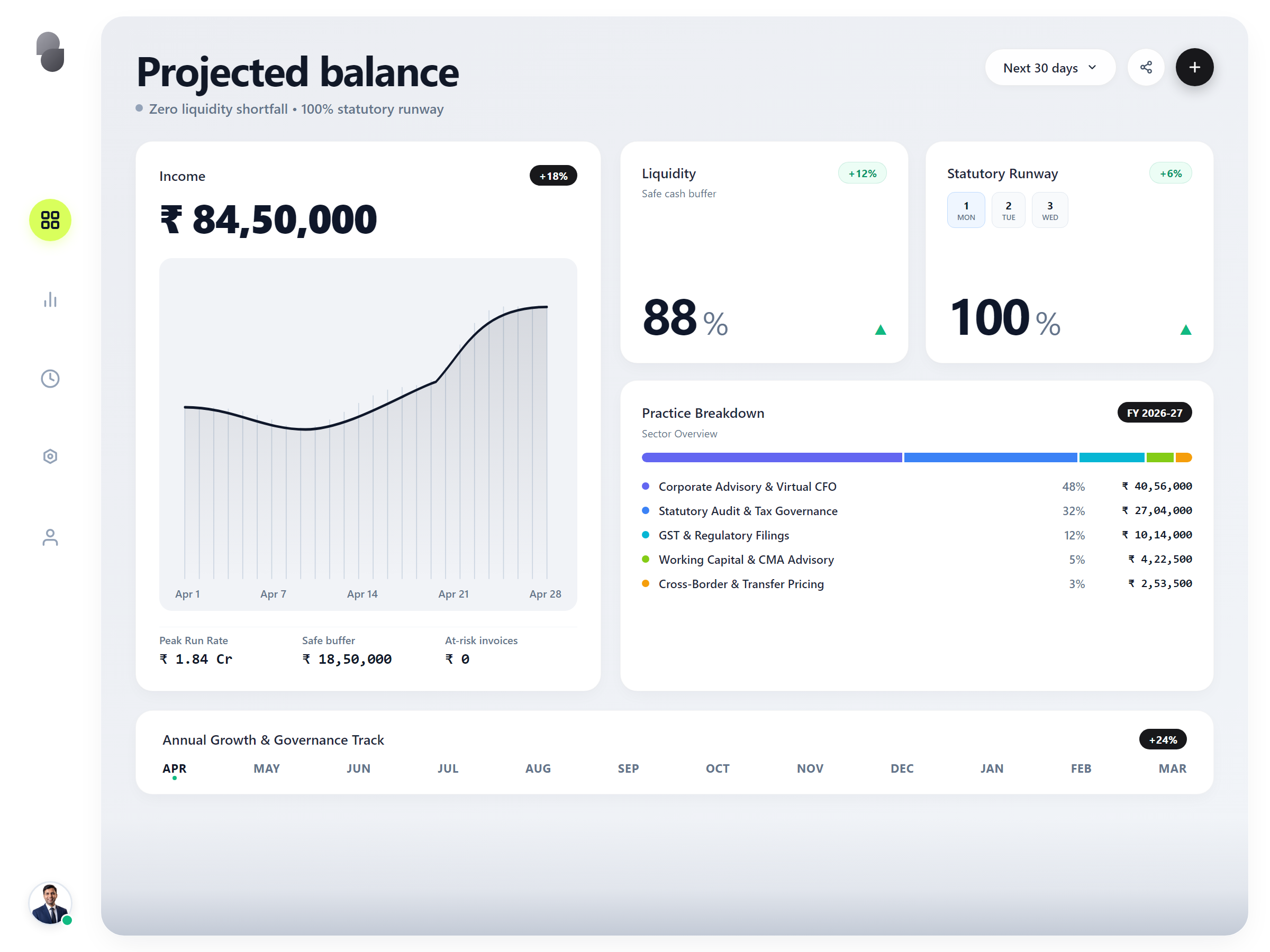
By rolling this 13-week projection forward each week, a liquidity shortfall is visible 8 to 10 weeks in advance—providing ample runway to adjust procurement, accelerate debtor recovery, or arrange promoter loans.
See also



Strategic Financial Leadership & Advisory
Lav K Sharma & Co. delivers Virtual CFO leadership, corporate tax planning, and statutory compliance discipline to growing enterprises across India.